

The first few months of 2026 have gotten off to start with not one but two books that revisit, to varying degrees, the subject of the Skids and Stuart Adamson. The first of them is this slim but illuminating book from Richard Jobson reflecting ostensibly on the background to the 1980 Skids album ‘The Absolute Game’, but much more beside. The second tome is ‘Stay Alive: The Life and Death of Stuart Adamson’, by Scott Rowley and is an official biography chronicling his career and tragic death. That will have to wait for another time
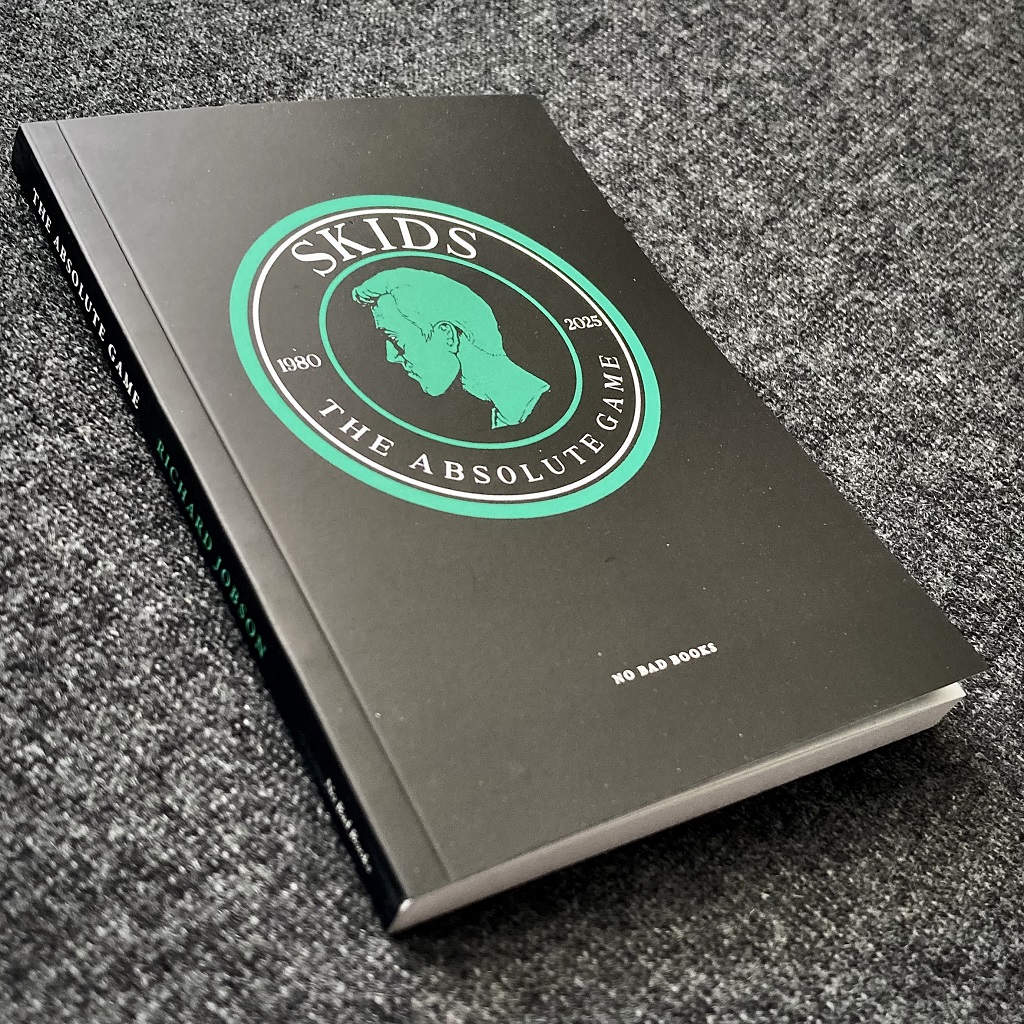
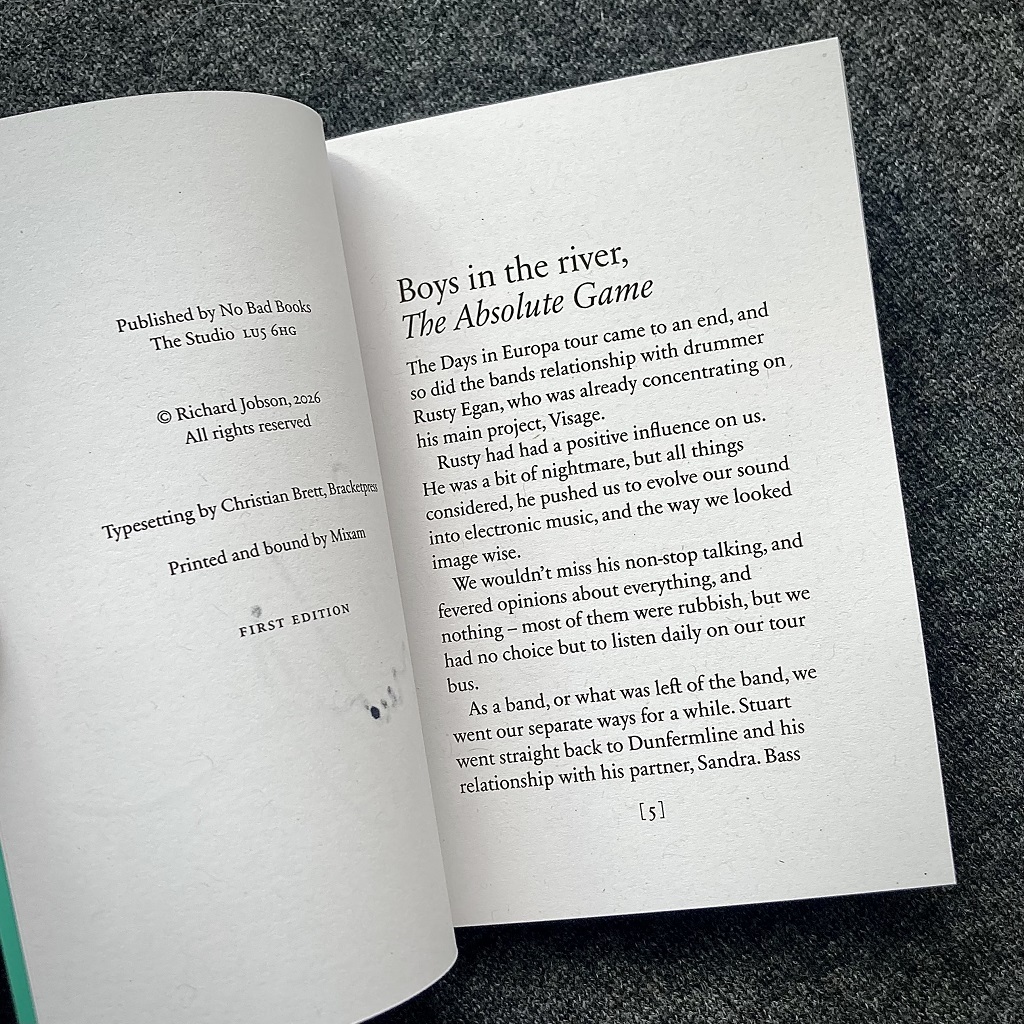
Jobson’s book (one of a few already penned) opens after the end of 1979’s tour to support the ‘Days In Europa’ album as the various members of the band disperse, Jobson to live in Berlin, a brief period which he recounts as a somewhat harrowing period that would cast a shadow for some time long after. (Jobson’s ‘The Kreuzberg Sonata’ book is a fictionalised take on this period and he also notes that The Armoury Show would better recount this period.) Along the way Jobson notes the departures of drummer Rusty Egan (who admittedly was a short-term hired hand rather than full band member) to concentrate on Visage, and both original bass player Will Simpson and ‘Days In Europa’ tour keyboard player Ally Moore after the latter was not required to stay for the next album project.
There are three particular topics that I feel recur throughout; firstly the lack of management and consequent issues with the record label, that leads said label to become something of a de facto management force that influences decisions such as the remix and re-issue of the ‘Days In Europa’ (due to their dislike of the original Bill Nelson production job). It’s mentioned several times that the next album should be a return to a ‘guitar’ album template and devoid of the experimentation of ‘Days In Europa’. Secondly, the lack of Skids success beyond the UK, particularly in Europe, clearly a missed opportunity in Jobson’s view. Thirdly, the by now transformed, distant relationship with Stuart Adamson and the mysteries of his behaviour and expectations of the Skids.
As it focuses on ‘The Absolute Game’, it’s no surprise that there’s rich detail on the lyrical themes of its songs, the background and how they came to be. I had not realised just how many of the songs on the album refer to children, and a loss of innocence is a theme that Jobson identifies running throughout, spawned from his love and experiences in Berlin. It’s a slim volume, fair enough, but even so, there’s a lack of background to the recruitment of the new members Mike Bailie and Russell Webb, which I would have felt pertinent.
When rehearsals for what would become the next album take place – in London and Dunfermline – they come to an end when Jobson is informed during the rehearsal period in Scotland by Stuart Adamson that he doesn’t want to work with him any longer. Jobson ruminates on the background to Adamson’s life at the time – looking for a more stable life with his wife, as compared to Jobson’s somewhat more unsettled ‘punk’ life and attitude, and that they both experienced difficult childhoods. Obviously, this period passes, though seemingly without apology nor explanation from Adamson, and the rehearsals/writing resume, proceed and eventually lead to recording the album – what would turn out to be the band’s most successful- at Virgin’s residential recording studio in Oxfordshire, England, ‘The Manor’.
46 years on from the period in question, Jobson is quite brutally to the point on some of the fellow band members, Russell Webb in particular, which given the multiple projects spanned and later reformations are a revelation.
“When I came back to London, I was told that Bill Simpson had left the band after he was told by Stuart that we didn’t want to work with his friend, the keyboard player, Ally Moore. It was a strange decision on his part. I thought Stuart might have gone out of his way to convince him to stay, but he didn’t seem to care that much, which was surprising considering how long they had been friends. So, it left only the two of us. The drummer, Rusty Egan had gone back to his main project, Visage.”
On recording the drum tracks at The Manor;
“Stuart Adamson was not here yet, which was probably a good idea, but Webb was in the main control room having his say, like he’s our new musical leader. Was this the beginning of his plotting to become our chief singer/songwriter – a man who has never written a hit song (he never will).”
The book is somewhat more detailed about the circumstances of the ‘Strength Through Joy’ “free album” that came packaged with the initial run of ‘The Absolute Game’. I had always assumed that these were likely pieces that were developed alongside the album tracks during recording, but in fact the ‘Absolute Game’ album looks to have been a pretty focussed and exact piece under the production of Mick Glossop (who had been in attendance from the early rehearsals and thereby influenced the arrangements, making the recording process quite straightforward). By contrast, ‘Strength Through Joy’, as it became, hails from a wholly separate period at Rockfield Studios rehearsal studios, where the band decamped to ostensibly to rehearse for the tour to promote ‘The Absolute Game’.
Its a brief but illuminating read and ends on something of a bleakly reflective note from Jobson – if you have an interest in the band and this period in particular it is worth tracking down and giving it your time.